
Stretching
Therapy
Stretching therapy is a structured, therapist-guided approach to improving flexibility, mobility, and ease of movement. It combines gentle, sustained stretches with assisted movement, breath coordination, and soft-tissue techniques to help reduce stiffness, improve posture, and support healthy joint function. Sessions are tailored to each person’s needs and may include passive stretching, active-assisted movement, and education on safe mobility strategies.
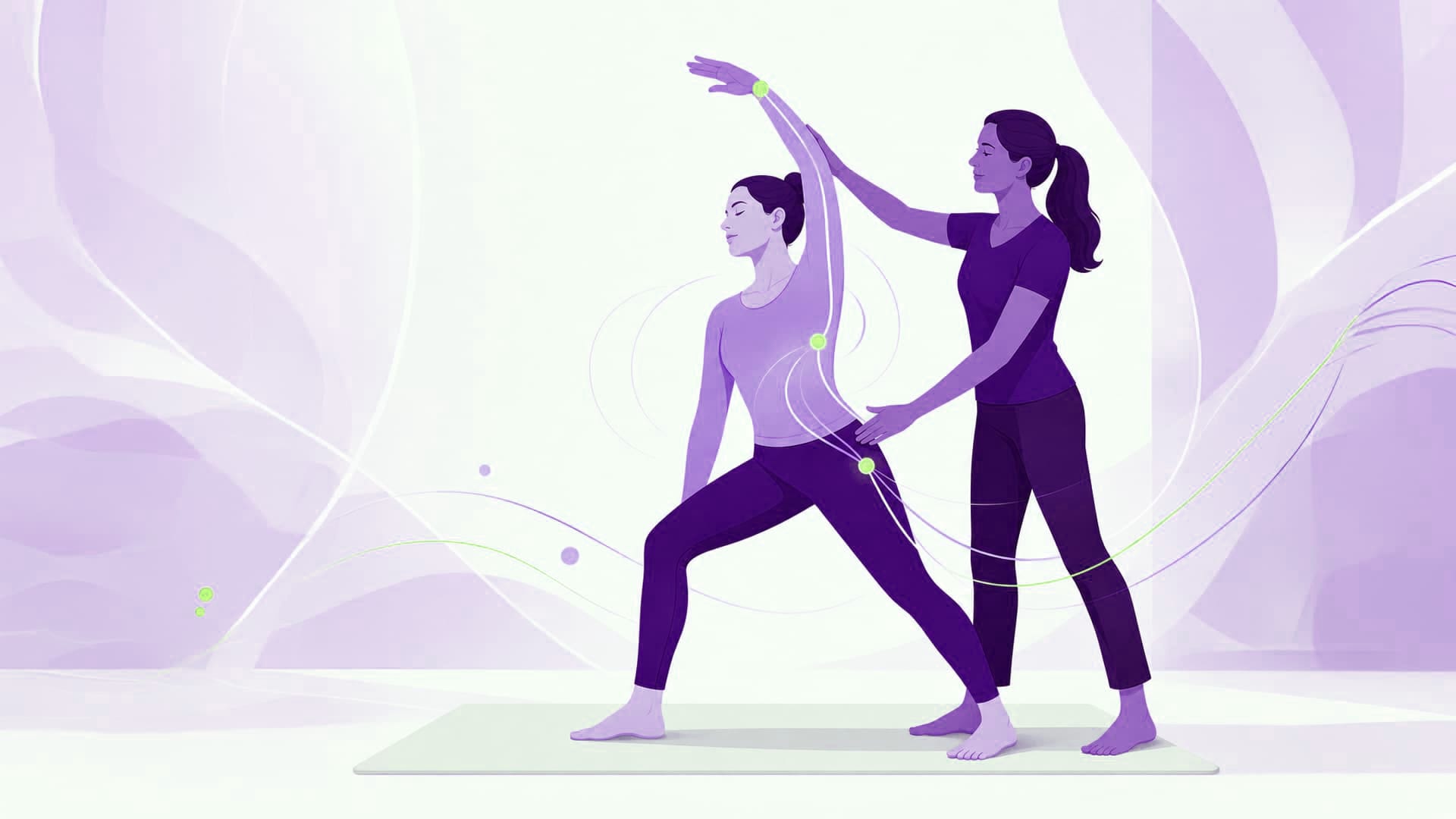
Stretching therapy typically blends several evidence-informed components:
- 01
Passive stretching—therapist moves the client’s limb through a range of motion
- 02
Active-assisted stretching—client participates while the therapist supports or guides
- 03
PNF / contract–relax techniques—neuromuscular methods to improve flexibility
- 04
Joint mobilization—gentle oscillation or traction within a comfortable range
- 05
Myofascial and soft-tissue preparation—warming tissues before deeper stretching
- 06
Breath-guided movement—using exhalation to reduce protective muscle tone
- 07
Movement re-patterning—helping client sense and use new ranges safely
It is not a single modality but a category of techniques used across physiotherapy, RMT, osteopathy, athletic therapy, yoga therapy, and somatic(EMF) practices.
Stretching therapy influences the body through:
- 01
Neuromuscular modulation—reducing protective muscle guarding
- 02
Improved tolerance to stretch—nervous system adapts to new ranges
- 03
Fascial gliding—gentle movement improves tissue hydration and elasticity
- 04
Joint mechanics—mobilization supports smoother movement
- 05
Interoception—slow, mindful stretching enhances body awareness
- 06
Parasympathetic activation—calming effect through breath and rhythm
MET
MET (Muscle Energy Technique) is a gentle, active manual therapy method where the client performs a light, controlled muscle contraction while the therapist provides resistance and guides the body into a new, more comfortable range of motion.
It is one of the core techniques in osteopathic manual therapy, but it is also widely used in massage therapy, physiotherapy, and athletic therapy.
MET is not forceful. It works by engaging the nervous system, not by pushing into barriers.
MET influences:
- 01
Neuromuscular inhibition—reduces guarding and protective tension
- 02
Improved joint mobility—gentle repositioning without force
- 03
Proprioceptive awareness—helps the body sense new movement options
- 04
Fascial and ligamentous balance—supports more efficient load transfer
- 05
Interoception—clients feel more connected to their movement patterns
This makes MET a perfect bridge between manual therapy and somatic movement work.
How MET Differs From PNF
Both are useful, but MET is subtler, more nervous-system oriented, and blends beautifully with your osteopathic + somatic approach.
PNF
PNF (Proprioceptive Neuromuscular Facilitation) is a stretching and neuromuscular technique that uses gentle muscle contractions followed by assisted stretching to improve mobility, flexibility, and neuromuscular control. It works by engaging the nervous system to reduce protective muscle tone and allow greater range of motion.
PNF is widely used in physiotherapy, athletic therapy, massage therapy, and osteopathic manual practice.
PNF influences:
- 01
Neuromuscular inhibition—reduces protective muscle guarding
- 02
Improved stretch tolerance—nervous system allows more range
- 03
Proprioceptive awareness—better sense of joint position and movement
- 04
Functional mobility—integrates strength + flexibility
- 05
Interoception—clients feel more connected to their movement patterns