
Myofascial
Therapy
Myofascial techniques are gentle, hands-on methods that help release tension and improve mobility in the body’s connective tissues (fascia). The fascia is the body-wide connective tissue network that surrounds muscles, bones, nerves, and organs. Using slow pressure, stretching, and guided movement, these techniques support easier movement, reduce stiffness, and enhance overall body awareness. They are performed comfortably and adapted to each person’s needs.
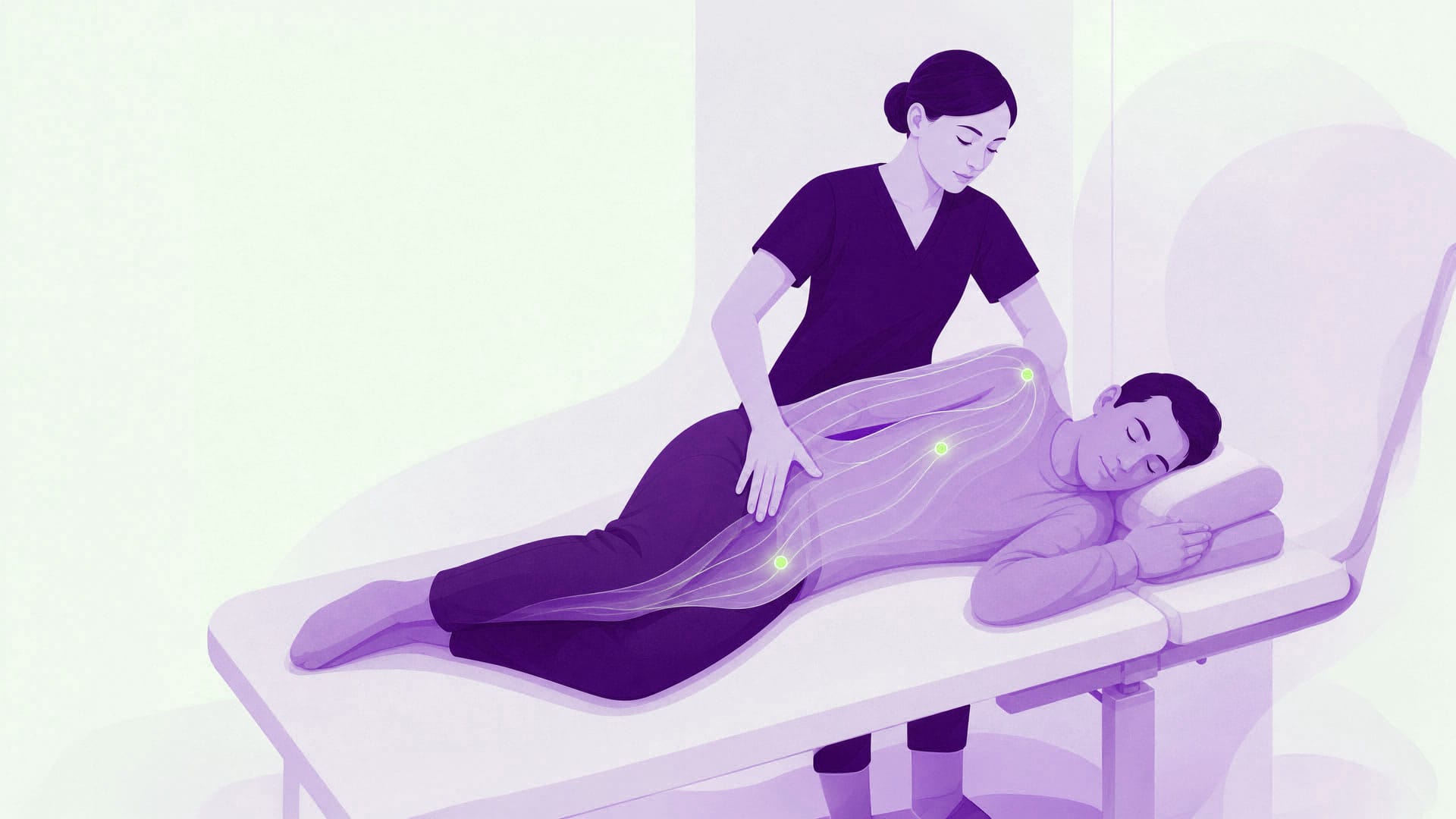
Myofascial work is not one single method, it’s a category of techniques used across massage therapy, osteopathy, physiotherapy, and somatic practices. Common elements include:
Sustained pressure — slow, gentle pressure into restricted fascial layers
Shearing and gliding — moving one tissue layer relative to another
Cross-fiber techniques — perpendicular pressure to improve tissue mobility
Fascial stretching — lengthening fascial chains or planes
Skin rolling — lifting and mobilizing superficial fascia
Indirect techniques — following tissue ease to reduce protective tone
Direct techniques — engaging tissue barriers to improve glide
Movement integration — combining manual contact with active or passive movement
These techniques are typically slow, quiet, and subtle, allowing the nervous system to down-regulate and permit change.
Myofascial work influences the body through:
Neuromodulation — reducing protective muscle guarding
Improved fascial glide — enhancing hydration and elasticity
Interoceptive awareness — increasing body awareness and sensory clarity
Load transfer efficiency — improving how forces move through the body
Reduced nociceptive input — decreasing threat signals to the nervous system
Parasympathetic activation — calming effect through slow, sustained touch