

01 · WHAT SHOULD WE KNOW FIRST?
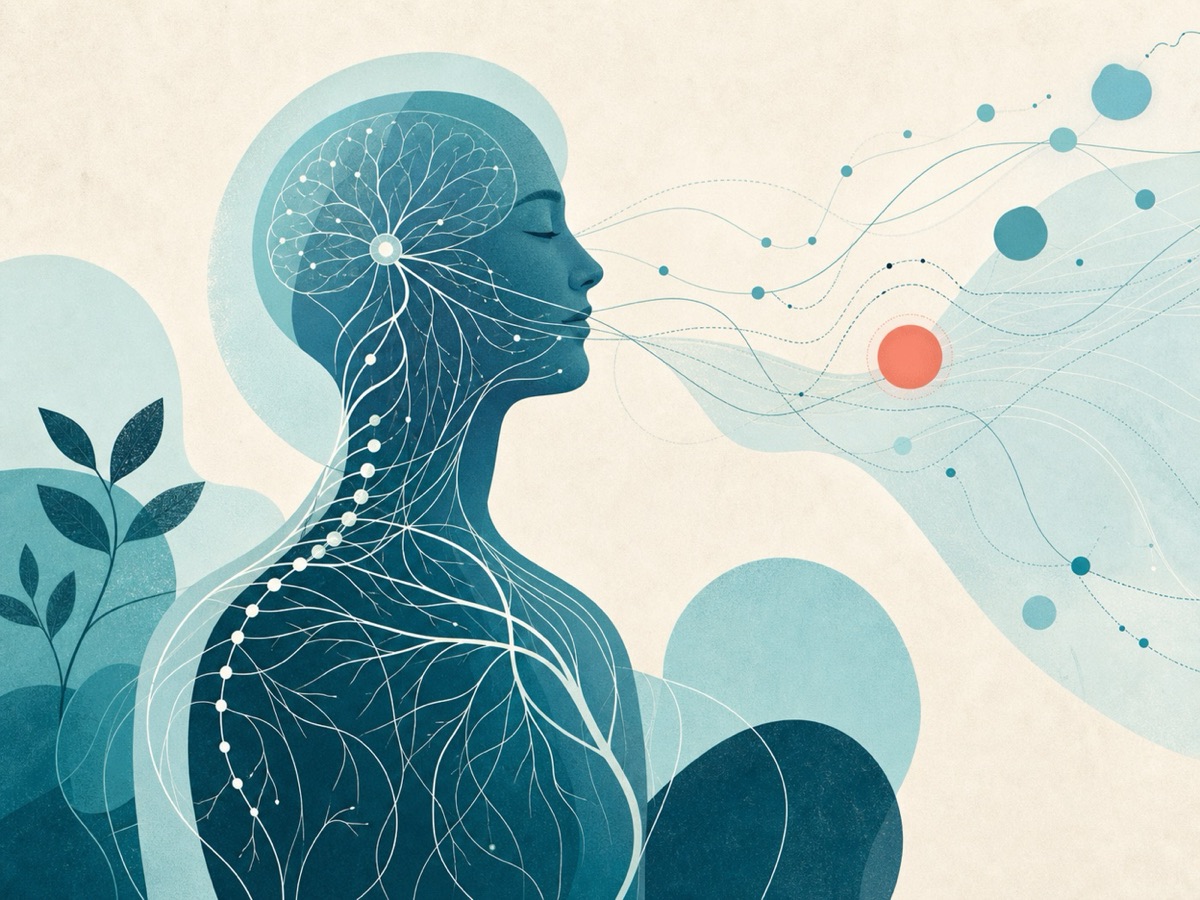
Contemporary pain science describes pain as a personal, context-sensitive protective experience. It is influenced by sensory information, prior experience, expectations, emotion, stress and social context.
Read the IASP definitionPain is an unpleasant sensory and emotional experience associated with, or resembling that associated with, actual or potential tissue damage.
International Association for the Study of Pain, revised definition
Pain and nociception are not the same.
Nociception refers to neural processing of potentially harmful events. Pain is the conscious experience. One can influence the other, but pain cannot be inferred solely from activity in sensory neurons.
Pain is always personal.
Biological, psychological and social factors influence pain to different degrees. A person’s report of pain deserves to be heard and respected.
02 · THE BODY-SELF SYSTEM
The Neuro-matrix
Ronald Melzack proposed that a widely distributed neural network integrates many kinds of information. Its changing output, the neuro-signature, contributes to the qualities of the pain experience.
- NociceptionPotential danger signals
- InteroceptionInternal body state
- ContextEnvironment and safety
- CognitionBeliefs and expectations
- EmotionFear, calm and meaning
- MemoryLearning and associations
- Social worldSupport, isolation, threat
Melzack’s model moved pain science away from a simple one-to-one relationship between injury and pain. The nervous system is not a passive receiver. It filters, selects, modulates and integrates information.
Melzack, From the gate to the neuromatrixSAME TISSUE STATE. DIFFERENT EXPERIENCE.
Why can similar injuries feel so different?
Each person brings a different history, stress load, emotional state, social setting, set of beliefs and movement habits. These do not make pain less real. They help explain why pain intensity and persistence do not always map neatly onto tissue findings.
03 · HOW CONTEXT CAN ALTER PAIN
Threat or challenge?
Appraisal is the way the nervous system interprets a situation. Incoming information may be treated as dangerous, manageable or safe enough to explore.
- More guarding
- More avoidance
- Lower confidence
- Heightened vigilance
- Active coping
- Graded exploration
- Greater confidence
- More movement options
Sensory input
Nociception, inflammation, stiffness and protective muscle activity can all contribute information.
Predictions
Expecting danger can increase vigilance. Safe, graded experience can help update expectations.
Emotional state
Fear, anxiety and overwhelm can raise perceived threat. Calm and confidence may lower it.
Environment
Support, familiarity and a sense of control can change how a situation is interpreted.
Prior learning
Past injury and learned associations can prepare protection before a movement has fully begun.
Education can reduce uncertainty. Graded experience can create new evidence of safety.
04 · SOMATIC MOVEMENT AND MANUAL CARE
Changing the conversation with the body.
Education, attention-directed movement and hands-on care may change some of the information available to the nervous system. They are not ways of proving pain is psychological, and they do not replace appropriate medical assessment.
Understand
Reframe pain as complex and potentially modifiable.
Explore
Use slow, attention-focused movement and sensory discrimination.
Practice
Build confidence through tolerable, graded experiences.
Adapt
Update movement options and practical self-management.
SOMATIC MOVEMENT
Attention becomes information.
Slow movement, sensory discrimination and graded exposure may help reduce fear, improve proprioceptive awareness and create new experiences of movement. Evidence varies by method and condition, so outcomes should not be generalized to every person.
Feldenkrais systematic reviewMANUAL CARE
Touch can support, not replace, learning.
Manual approaches may temporarily modulate sensation, movement and body awareness. A small fMRI study explored changes in brain activity related to interoception after osteopathic treatment, but such findings remain an area for further research.
Cerritelli et al., 202005 · PUTTING THE IDEAS TOGETHER
Less fear. More options.
The goal is not to argue someone out of pain. It is to reduce uncertainty, respect the experience, identify what needs medical attention, and create a safer path back toward meaningful activity.
Start with understanding
Clear education can help separate pain from an automatic assumption of ongoing damage.
Move within tolerance
Graded activity is adjusted to the person rather than forced through a predetermined range.
Pair support with agency
Hands-on care can facilitate a process, but active learning and self-management remain central.
Keep the wider context visible
Sleep, stress, health conditions, relationships, work demands and access to care may all matter.
THE CENTRAL IDEA
Pain can be protective without being a precise measure of tissue damage. Because the system is adaptable, care can focus on both protection and possibility.
06 · REFERENCES AND FURTHER READING
Follow the evidence.
The original notes supplied by Nana have been edited for clarity. Key sources are linked below so readers can explore the research directly.
01IASP revised definition of pain
International Association for the Study of Pain. Revised definition and accompanying notes, 2020.
Open source02From the gate to the neuromatrix
Melzack, R. (1999). Pain, 82(Suppl. 1), S121 to S126. DOI: 10.1016/S0304-3959(99)00145-1.
Open PubMed03Pain neuroscience education
Louw, A., Diener, I., Butler, D. S. and Puentedura, E. J. (2011). Archives of Physical Medicine and Rehabilitation, 92(12), 2041 to 2056.
Open PubMed04Threat and challenge appraisals
Jackson, T., Wang, Y. and Fan, H. (2014). The Journal of Pain, 15(6), 586 to 601. Chen, S. and Jackson, T. (2019). PLOS ONE, 14(4), e0215087.
Open PubMed05Feldenkrais systematic review
Berland, R. et al. (2022). International Journal of Environmental Research and Public Health, 19(21), 13734.
Open PubMed06Alexander Technique, exercise and back pain
Little, P. et al. (2008). BMJ, 337, a884. Randomized trial involving 579 participants with chronic or recurrent low back pain.
Open PubMed07Osteopathic modality and interoception
Cerritelli, F. et al. (2020). Scientific Reports, 10(1), 3214. Small randomized placebo-controlled fMRI study.
Open PubMed08Central sensitization
Woolf, C. J. (2011). Pain, 152(Suppl. 3), S2 to S15. DOI: 10.1016/j.pain.2010.09.030.
Open PubMed