



- Your cart is empty Browse Shop
Performance · Zoroastrian cosmology
Creation
In the Bundaheshn, one of the most important Middle Persian texts of Zoroastrian cosmology, creation begins with Ahura Mazda’s realm of pure light, a timeless and perfect existence defined by Asha (truth, order, harmony). Opposite this stands Ahriman, dwelling in the abyss of darkness, ignorance, and non-being.
The Bundaheshn describes creation as a deliberate act of protection: Ahura Mazda brings forth the spiritual and material worlds to limit Ahriman’s destructive reach. The first creations are spiritual: Amesha Spentas, divine beings of light, followed by the material universe, formed as a battleground where good can ultimately overcome evil. Each creation is purposeful, designed to resist Ahriman’s corruption.
In Zoroastrian cosmology, Jahi embodies the corrupting force of Ahriman, spreading impurity and deception. She stands in direct opposition to Spenta Mainyu, the Holy Spirit of Ahura Mazda, who represents growth, goodness, creativity, and the forward movement of life. While Spenta Mainyu nurtures creation and protects all that is pure, Jahi disrupts it by tempting, weakening, and polluting the moral fabric of humanity.
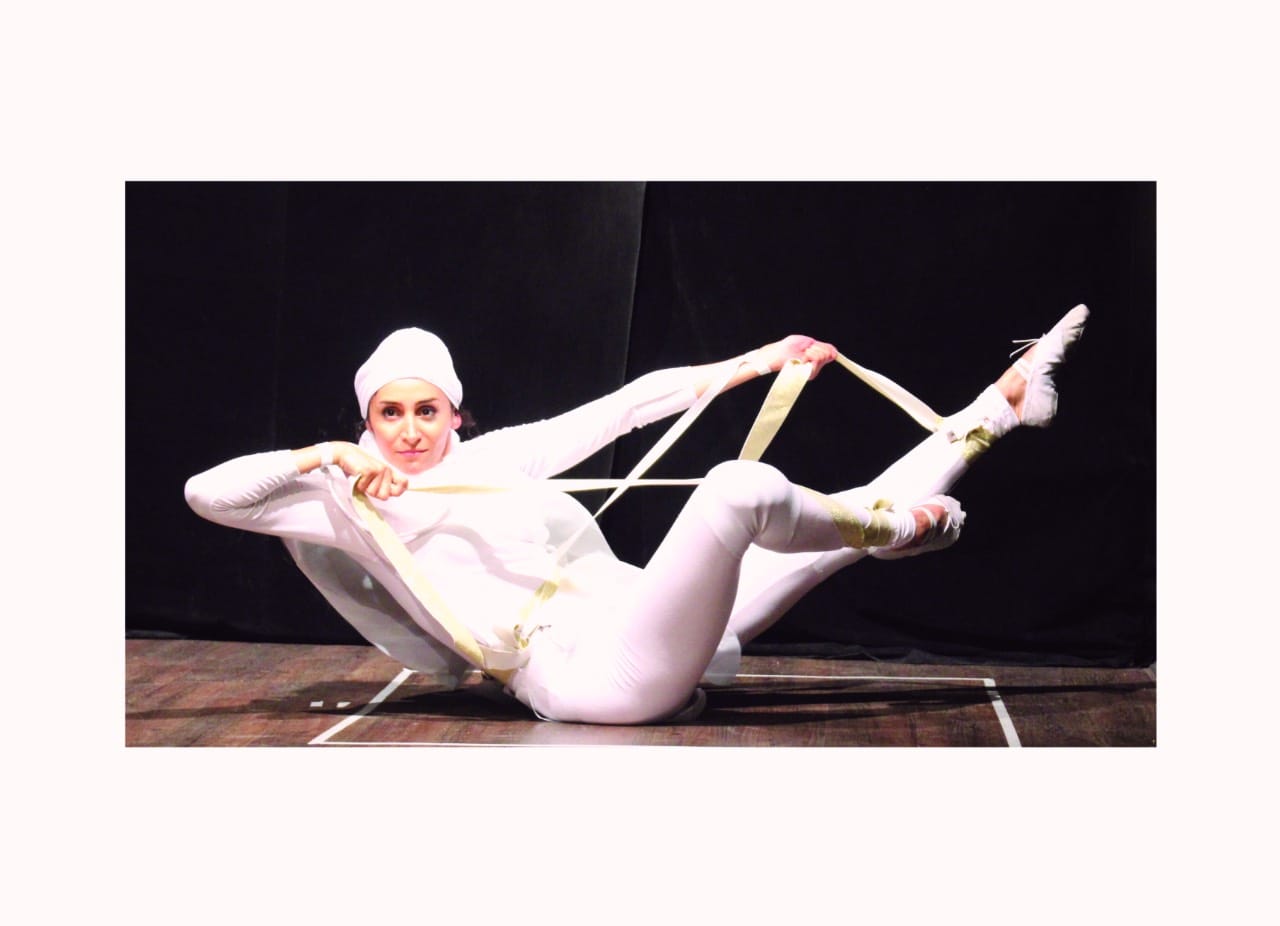
Yet this performance introduces a new perspective on the myth: Jahi and Spenta Mainyu are both daughters, one of Ahriman, one of Ahura Mazda, born into a cosmic war they never chose. Their fathers are enemies, and so they are forced into opposition, unable to be friends, unable to escape the roles assigned to them. This retelling reveals the hidden emotional side of the myth, showing Jahi simply as a figure trapped in a destiny shaped long before.